Europe is open for business: Setting up your European supply chain via the Netherlands
A small country, big in logistics
For American companies looking to cross the Atlantic in 2026, the Netherlands offers a unique combination of stability, connectivity, and innovation. Dutch policymakers prioritize on logistics and entrepreneurial spirit meaning that funding is available for supply chain innovation programs and stimulating collaboration between companies, knowledge institutions and government in a trademark Dutch approach called the “Triple Helix’’. With a long history of being a trading nation and approximately 942,000 logistics specialists – about 10 % of the Dutch workforce – It is safe to say that the Netherlands is the top choice in expanding your American Business into Europe.
Why the Netherlands is your strategic gateway to Europe
The Netherlands acts as the number one entry point into the wider European market of over 450 million consumers. Around 250 million of these consumers within 600 miles radius that can be served within a 24-48 hour delivery window. Due to the logistic infrastructure, hinterland connections and business climate, companies are able to set up a highly efficient supply chain across the entire European continent. A stable regulatory environment and transparent legislation, offering American firms a predictable and secure landscape for long-term investment. As a core member of the European Single Market, the Netherlands operates under a common trade policy with no internal tariffs or other barriers, ensuring your goods flow freely across the continent. No surprise that the Netherlands ranks fourth place in the world in export volumes (after the U.S., China and Germany).
Cash flow advantages through the Netherlands: The “Article 23” deferment license
Perhaps the most powerful financial tool for U.S. companies is the Article 23 VAT Deferment license. In most European countries, when you import goods, you must pay the Value Added Tax (VAT), often 21%, immediately at the border. This creates a massive cash-flow drain, as that capital is tied up until you reclaim it months later after selling the goods to the end customer.
Under the Dutch Article 23 system, you don’t pay VAT at the moment of import. Instead, the VAT is “deferred” to your periodic tax return, where it is simultaneously recorded as both a payable and a deductible item. The net result is a zero-cash-flow impact. For a U.S. company moving millions of dollars in inventory, this represents a significant liquidity advantage that keeps your capital working for your business rather than sitting in a government account.
No own legal entity, office or staff needed – General Fiscal Representation
For many American firms, the primary barrier to expansion is the perceived need to hire local staff and set up complex office structures. In the Netherlands, you can easily bypass this through General Fiscal Representation (GFR).
By appointing a fiscal representative, your company can obtain a Dutch VAT number and an EORI number (required for EU customs) without having a single person on your payroll in the Netherlands. The fiscal representative acts as your local interface with the Dutch Tax and Customs Administration, taking full responsibility for:
- Applying for your VAT and Article 23 licenses.
- Managing periodic VAT filings and European Sales Listings.
- Ensuring total compliance with EU tax laws.
Get your goods smoothly across Europe and beyond – Third-Party Logistics
Combined with the world-class Third-Party Logistics (3PL) providers in the Netherlands, a fiscal representative and an indirect customs representative – authorized to customs clear your goods allows for a completely “virtual” entry into the European market. You can ship your goods in bulk to a Dutch warehouse, where a 3PL partner handles the importing/customs process, storage, picking, packing, numerous other value-added logistics (VAL) activities, and final-mile delivery across the continent and further. The benefits of partnering with a logistics provider are numerous: greater flexibility, significant cost savings, scalability, decreased risk, enhanced visibility via tracking and seamless integration with larger supply chains.
As your fiscal representative can manage the tax side and the 3PL handles the physical part, you can sell to both B2B and B2C customers across all 27 EU member states (and beyond) while maintaining your entire management team in the United States. This model reduces overhead while providing the same speed of delivery as any local European company which gives US companies the ability to compete with local players.
Great connectivity and infrastructure
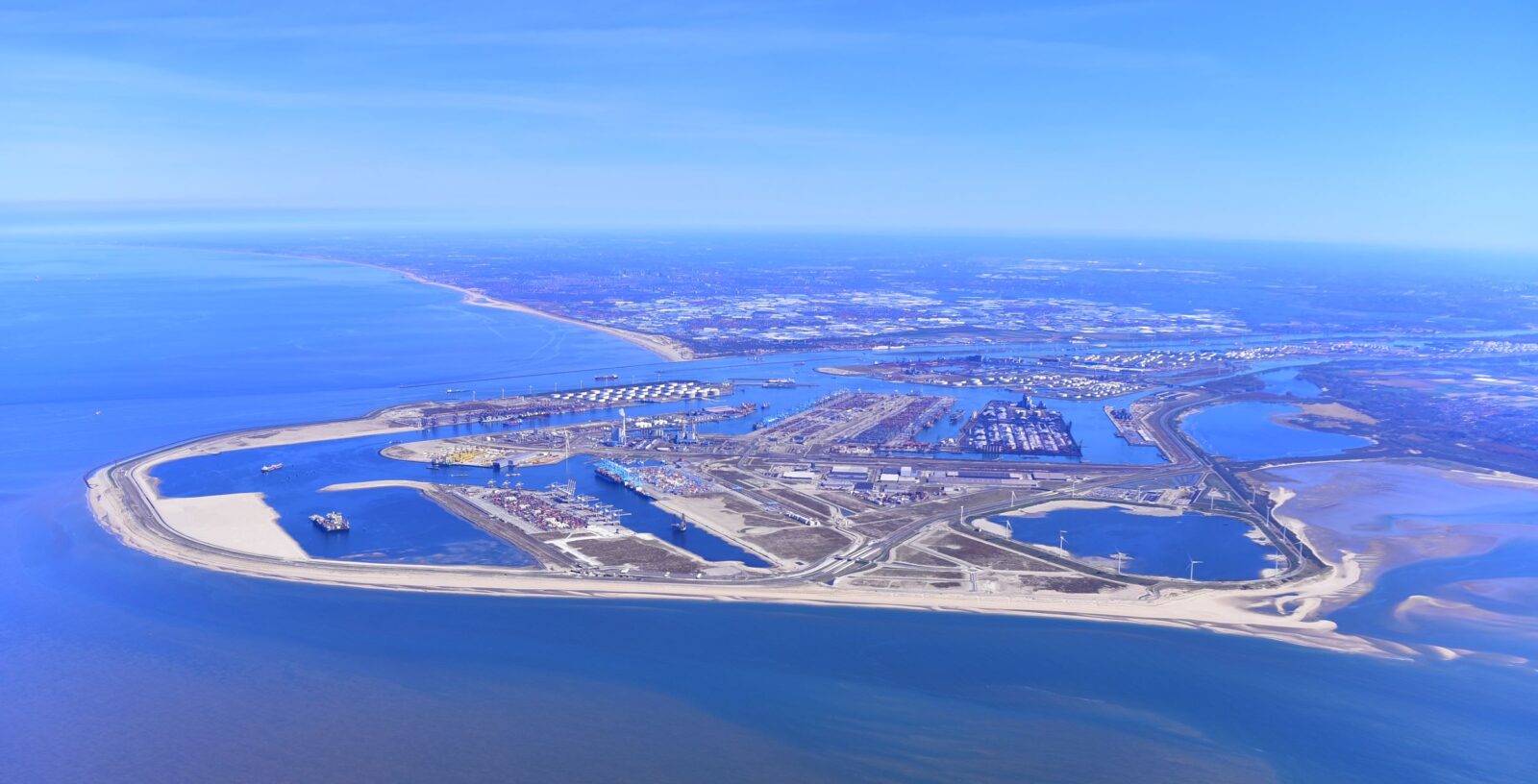
The Netherlands is home to the Port of Rotterdam, the biggest port and only deep-sea port in Europe and Amsterdam Airport Schiphol, one of the world’s best connected airports. In combination with our multimodal connections to the hinterland and dense network, the Netherlands has a proven track record of being the gateway into Europe. In 2026, as supply chain resilience remains a top priority, the ability to reach 95% of Europe’s most lucrative markets within 1-2 business days is a USP of the Netherlands. Coupled with the Amsterdam Internet Exchange (AMS-IX), your digital operations will be as fast and reliable, just as your physical logistics.
Talent and stability
If you consider having local staff in the future, you will benefit from an environment where the workforce consistently ranks #1 globally for English proficiency. Furthermore, the Netherlands maintains its reputation as a pragmatic, stable democracy. The Dutch government understands that international trade is the nation’s lifeblood, resulting in a transparent legal system and a tax authority that prioritizes clear, upfront communication over bureaucratic surprises.
The Netherlands offers a low-risk, high-impact entry point for U.S. companies considering establishing their footprint in Europe.