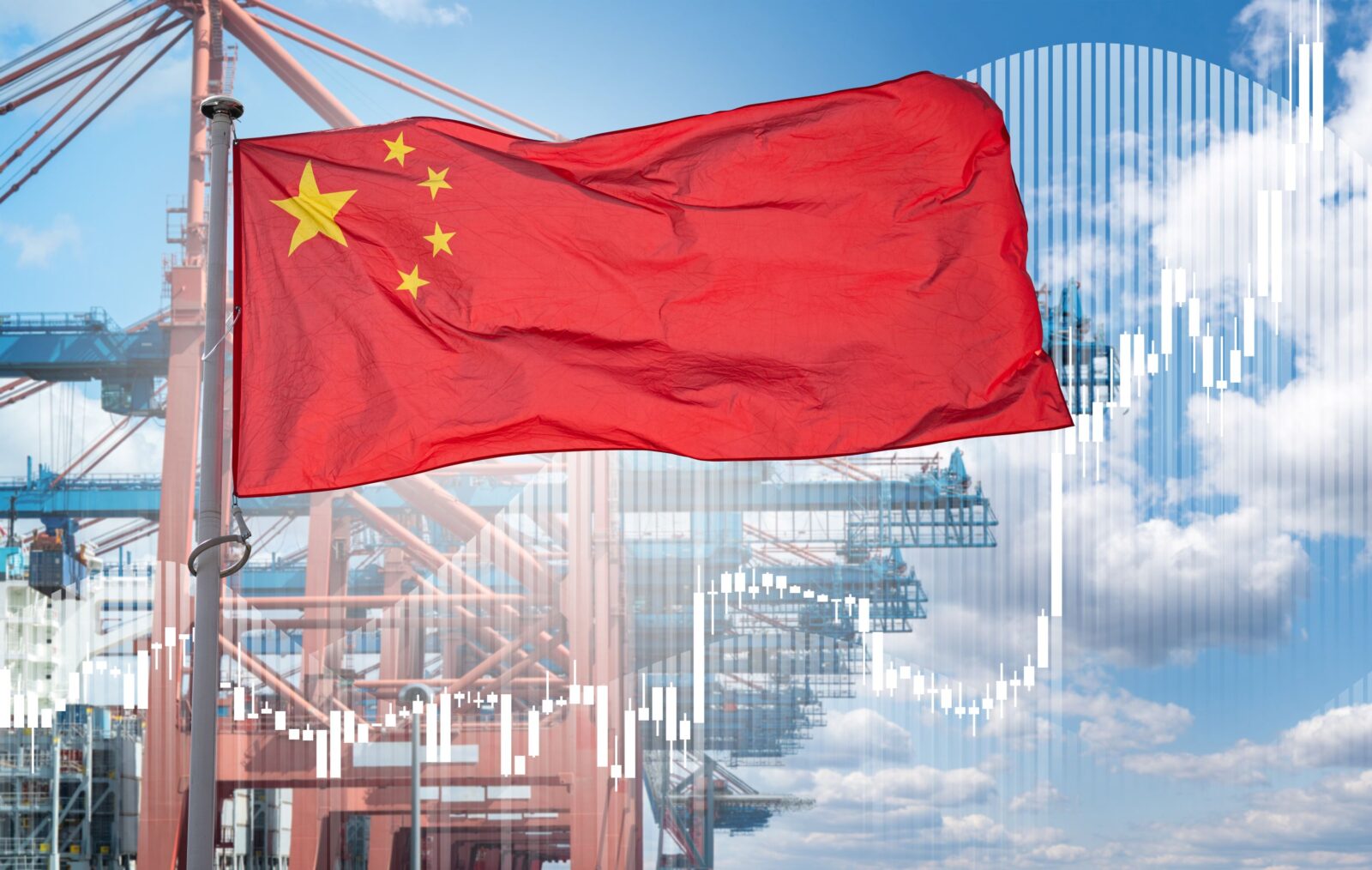
When the Rules Change: How U.S. Trade Is Reshaping the Global Supply Chain
For years, the international supply chain was largely a calculation. Where do we produce? What is the fastest route? How low can inventory go without increasing risk? Efficiency guided decision-making. That logic still applies, but it is no longer sufficient.
In the United States, external trade factors are affecting daily operations more directly and more quickly than before. Changes in tariffs, tighter regulatory requirements, and evolving customs frameworks are having a substantial impact on cost structures, supplier agreements, and sourcing strategies. What used to be primarily an optimization question has increasingly become a risk management question.
According to the 2026 Global Trade Report by Thomson Reuters, nearly three-quarters of surveyed trade professionals identify U.S. tariff volatility as the most impactful regulatory shift today. A large majority expect this volatility to remain in place for the coming years. That expectation alone is changing how companies approach their supply chains.
From optimization to resilience
What we are witnessing is not a sudden break, but a structural redesign of supply networks. Companies are reducing dependency on single regions, diversifying suppliers, and reconsidering their production footprint.
This trend is not limited to the United States. Broader global analyses by McKinsey on risk and resilience in global value chains, show that companies across sectors are rebalancing sourcing strategies to reduce exposure to concentrated risk and geopolitical uncertainty.
Many organizations are adjusting sourcing patterns. Others are exploring whether production can move closer to end markets. These are not marginal adjustments. They are strategic decisions that directly affect margins, competitiveness, and long-term market access.
At the same time, a significant share of companies indicate that they are absorbing at least part of the additional costs rather than passing them on entirely. This underlines how closely cost pressure and competitive positioning are linked to supply chain decisions. The supply chain is no longer just a cost model. It has become part of the broader business model.
Trade at the executive table
Perhaps even more telling than the shift in physical flows is the shift within organizations themselves. Trade functions, traditionally viewed as operational or compliance-focused, are gaining a stronger strategic role. More trade professionals report influence over procurement decisions and greater involvement at executive level. Supply chain management has become one of the top strategic priorities for the coming year. International trade is no longer simply an operational layer. It is increasingly embedded in risk management, governance, and long-term planning. The question is no longer only how fast or how cheaply a product reaches the market. The question is how robust the supply chain is when conditions change.
Technology as a response to complexity
As regulations and tariff regimes evolve more rapidly, the demand for real-time insight and scenario analysis increases. A growing number of organizations are exploring AI and other digital tools to manage trade processes more effectively. This is not about technology for its own sake. It is a response to complexity.
Supply chains are becoming more data-driven. Companies are investing in visibility, compliance automation, and predictive analytics to react more quickly to change. In that sense, the supply chain is no longer just physical infrastructure. It is a combination of infrastructure and information.
Global trade is not retreating, it is reconfiguring
Despite growing fragmentation in policy and regulation, global trade itself remains deeply interconnected. The DHL Global Connectedness Report 2024 shows that international trade flows continue to represent a substantial share of global economic activity. What is changing is not the existence of global trade, but how value chains are structured. In other words, globalization is not reversing. It is being reconfigured.
For companies operating in or trading with the United States, this means the playing field is shifting rather than shrinking. Routing decisions have become more strategic. Contracts need built-in flexibility. Origin determination and classification require greater precision. Compliance is moving from after-the-fact control to proactive steering.
In an environment where volatility is no longer an exception but a recurring pattern, predictability becomes a competitive advantage. This calls for supply chains that are not only efficient, but adaptable.
The role of the Netherlands in a less linear world
As global trade flows become less linear and more regionally balanced, the value of stable and well-integrated logistics ecosystems increases.
The Netherlands combines seaports, airports, inland connections, and digital customs systems within a compact geography. In a world where supply chains are continuously reassessed, this combination of predictability and flexibility can provide strategic value for companies looking to structure their European and transatlantic flows more robustly. Not because other regions are unstable, but because resilience carries greater weight in strategic decision-making.
Designing for what comes next
The U.S. supply chain is not standing still. It is evolving.
What is changing is not entrepreneurship itself, but the context in which it operates. Companies are no longer optimizing solely for cost. They are optimizing for resilience, diversification, and strategic flexibility. And that development, the supply chain is no longer an execution question. It has become a design question.